
In gantry crane design and selection, lifting capacity is often the first parameter customers focus on. However, an equally critical—but frequently misunderstood—concept is capacity redundancy. Capacity redundancy refers to designing or selecting a gantry crane with a rated lifting capacity higher than the nominal or average load requirement, providing an additional safety and performance margin.
In many industrial projects – such as precast concrete yards, steel mills, shipyards, rail yards, and power plants – capacity redundancy can significantly improve safety, reliability, and long-term operational efficiency. At the same time, unnecessary redundancy can lead to higher capital costs, increased structural weight, and inefficient energy use.
This article explores what gantry crane capacity redundancy really means, the engineering principles behind it, when it is necessary, when it is not, and how to determine the right level of redundancy for your application.
1. What Is Gantry Crane Capacity Redundancy?
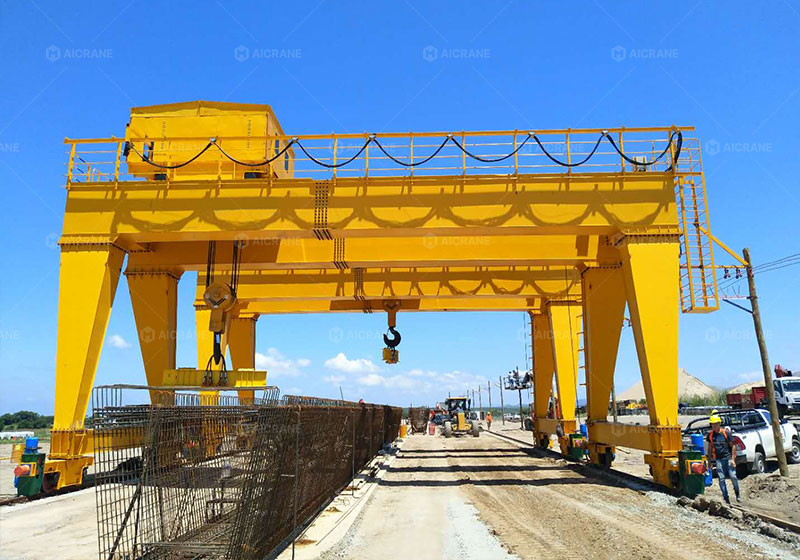
Gantry crane capacity redundancy is the intentional oversizing of lifting capacity beyond the maximum expected working load. For example:
-
A project requires lifting loads up to 32 tons
-
The selected double girder gantry crane has a rated capacity of 40 tons
The additional 8 tons is not meant for routine use, but rather to provide a buffer against uncertainties such as load variation, dynamic forces, wear, and environmental conditions.
It is important to distinguish capacity redundancy from:
-
Overloading (unsafe and prohibited)
-
Safety factors (already embedded in design codes)
-
Occasional load testing (temporary and controlled)
Capacity redundancy is a design and selection strategy, not a justification for exceeding rated limits.
2. Engineering Basis for Capacity Redundancy
2.1 Dynamic Loads and Impact Factors
Actual lifting conditions are rarely static. During crane operation, loads are affected by:
-
Acceleration and deceleration
-
Hoisting speed
-
Load sway
-
Wind forces (especially for outdoor gantry cranes)
These effects create dynamic amplification, meaning a 30-ton load can momentarily exert forces equivalent to 36–40 tons.
Although standards such as FEM, ISO, and CMAA include dynamic load factors, real-world operating conditions—especially in harsh environments—can exceed theoretical assumptions.
Capacity redundancy helps absorb these dynamic effects without pushing components toward their fatigue limits.
2.2 Load Uncertainty and Variability
In many industries, the exact weight of the load is not always known:
-
Precast concrete elements may vary due to moisture content
-
Steel coils can differ in density and dimensions
-
Scrap or waste materials are highly inconsistent
-
Modular equipment may include hidden attachments or rigging weight
A crane selected exactly at the nominal maximum load may operate at or near full capacity frequently, increasing stress on:
-
Hoist motors
-
Wire ropes
-
Gearboxes
-
Structural members
Capacity redundancy provides tolerance for these uncertainties.
2.3 Fatigue Life and Structural Durability
Gantry cranes are typically designed for millions of load cycles over their service life. Operating close to maximum rated capacity accelerates fatigue in:
-
Welded joints
-
Girder flanges
-
End truck connections
-
Bolted interfaces
By using a crane with redundant capacity, the average stress level per cycle is reduced, significantly extending fatigue life and reducing the risk of:
-
Cracks
-
Permanent deformation
-
Premature structural failure
This is especially important for:
-
A5–A8 duty class cranes
-
Continuous or multi-shift operations
3. Situations Where Capacity Redundancy Is Necessary
3.1 Heavy-Duty and High-Duty Class Operations
In applications with high duty cycles, such as:
-
Steel mills
-
Precast concrete factories
-
Shipbuilding yards
-
Container or rail cargo handling
The crane may perform hundreds of lifts per day. In these cases, selecting a gantry crane with 15–30% capacity redundancy can significantly improve reliability and reduce downtime.
For example:
-
Instead of a 50-ton crane for regular 45-ton lifts, a 60 ton gantry crane may be more appropriate.
3.2 Outdoor and Harsh Environmental Conditions
Outdoor gantry cranes are exposed to:
-
Wind loads
-
Temperature extremes
-
Corrosion (marine or coastal areas)
-
Uneven rail settlement
Wind-induced load swing and rail misalignment can increase actual stresses well beyond calculated values. Capacity redundancy helps compensate for these environmental uncertainties.
In coastal shipyards and ports, redundancy is often combined with:
-
Anti-sway systems
-
Reinforced girders
-
Higher-grade corrosion protection
3.3 Tandem Lifting and Dual-Crane Operations
When two rubber tyred gantry cranes lift a single load together, load distribution is rarely perfectly equal. Even a small synchronization error can result in one crane carrying 55–60% of the total load.
In such cases, capacity redundancy is not optional—it is essential.
Typical practice includes:
-
Selecting cranes with at least 20–25% excess capacity
-
Using synchronized control systems
-
Implementing load monitoring and interlocks
3.4 Future Expansion and Load Growth
Many industrial facilities evolve over time. Loads often increase due to:
-
Larger precast components
-
Heavier machinery
-
New production lines
-
Process optimization
Selecting a gantry crane with moderate capacity redundancy at the initial stage can avoid costly retrofits or crane replacement later.
This is particularly relevant for:
-
Steel structure workshops
-
Energy and power projects
-
Infrastructure-related precast yards
3.5 Safety-Critical Applications
In applications where load failure could lead to:
-
Severe injury or loss of life
-
Major equipment damage
-
Environmental incidents
Capacity redundancy provides an additional layer of risk mitigation. While it does not replace proper safety systems, it enhances overall system robustness.
4. When Capacity Redundancy May Not Be Necessary
4.1 Light-Duty or Infrequent Lifting
For workshops with:
-
Occasional lifting
-
Well-defined and consistent loads
-
A1–A3 duty classification
Selecting a crane exactly matching the maximum load may be sufficient and economically sensible.
4.2 Precision Manufacturing with Tight Weight Control
In some industries, such as:
-
Machinery assembly
-
Aerospace component handling
-
Controlled manufacturing environments
Load weights are precisely known, and dynamic effects are minimal. In these cases, excessive redundancy may lead to unnecessary cost without significant benefit.
4.3 Budget-Constrained Projects with Clear Limits
If a project has strict budget constraints and:
-
Load requirements are fixed
-
Future expansion is unlikely
-
Operating conditions are mild
A well-engineered crane selected exactly to specification can perform safely when supported by proper maintenance and operation.
5. How Much Capacity Redundancy Is Appropriate?
There is no universal percentage, but industry experience suggests:
| Application Type | Typical Redundancy |
|---|---|
| Light-duty indoor | 0–10% |
| Medium-duty industrial | 10–15% |
| Heavy-duty continuous operation | 15–30% |
| Tandem lifting | 20–25% |
| Harsh outdoor environments | 20–30% |
These values should always be evaluated alongside:
-
Duty class
-
Span and lifting height
-
Hoisting speed
-
Control method
-
Applicable design standards (ISO, FEM, CMAA)
6. Cost vs. Value: Is Redundancy Worth It?
While higher-capacity gantry cranes involve:
-
Increased steel consumption
-
Larger motors and drives
-
Higher transportation and installation costs
They often deliver long-term value through:
-
Reduced maintenance frequency
-
Lower risk of structural fatigue
-
Improved operational stability
-
Extended service life
-
Greater operational flexibility
In many cases, the lifecycle cost savings outweigh the initial investment.
Conclusion
Gantry crane capacity redundancy is not about overspending or ignoring engineering discipline—it is about strategic risk management and long-term performance optimization.
Capacity redundancy is particularly necessary when:
-
Loads are variable or uncertain
-
Duty cycles are high
-
Environmental conditions are harsh
-
Safety risks are significant
-
Future expansion is anticipated
At the same time, redundancy should be applied thoughtfully. Excessive oversizing without technical justification can reduce efficiency and inflate costs.
The optimal approach is to evaluate capacity redundancy holistically, considering load characteristics, operational demands, environmental factors, and lifecycle expectations. When properly applied, capacity redundancy becomes a powerful tool to ensure that gantry cranes operate safely, reliably, and efficiently throughout their entire service life.